Since 2024, the best way to experience seasonal Japanese cuisine in Munich has been our ever-changing „Journey to Japan“ menu, where we take you on a culinary trip to Japan in 5 or 7 small courses.
冬至 Tōji
winter solstice 2024
Around December 22 each year, the winter solstice takes place, the shortest day and longest night of the year. It's that time of year when it's gradually getting colder and people traditionally prepare for winter and stock up on food.
It is said that this is a good time to eat nutritious food to prepare the body for the severe cold.
This time, our menu is just the thing to prepare us for the harsh, cold weather, with an abundance of seasonal ingredients as they are eaten in Japan, but also with the best that can be found here.
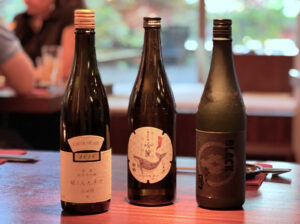
And as always, upon request, there is a Sake-Accompaniment by our sake sommelier, which you should definitely try.
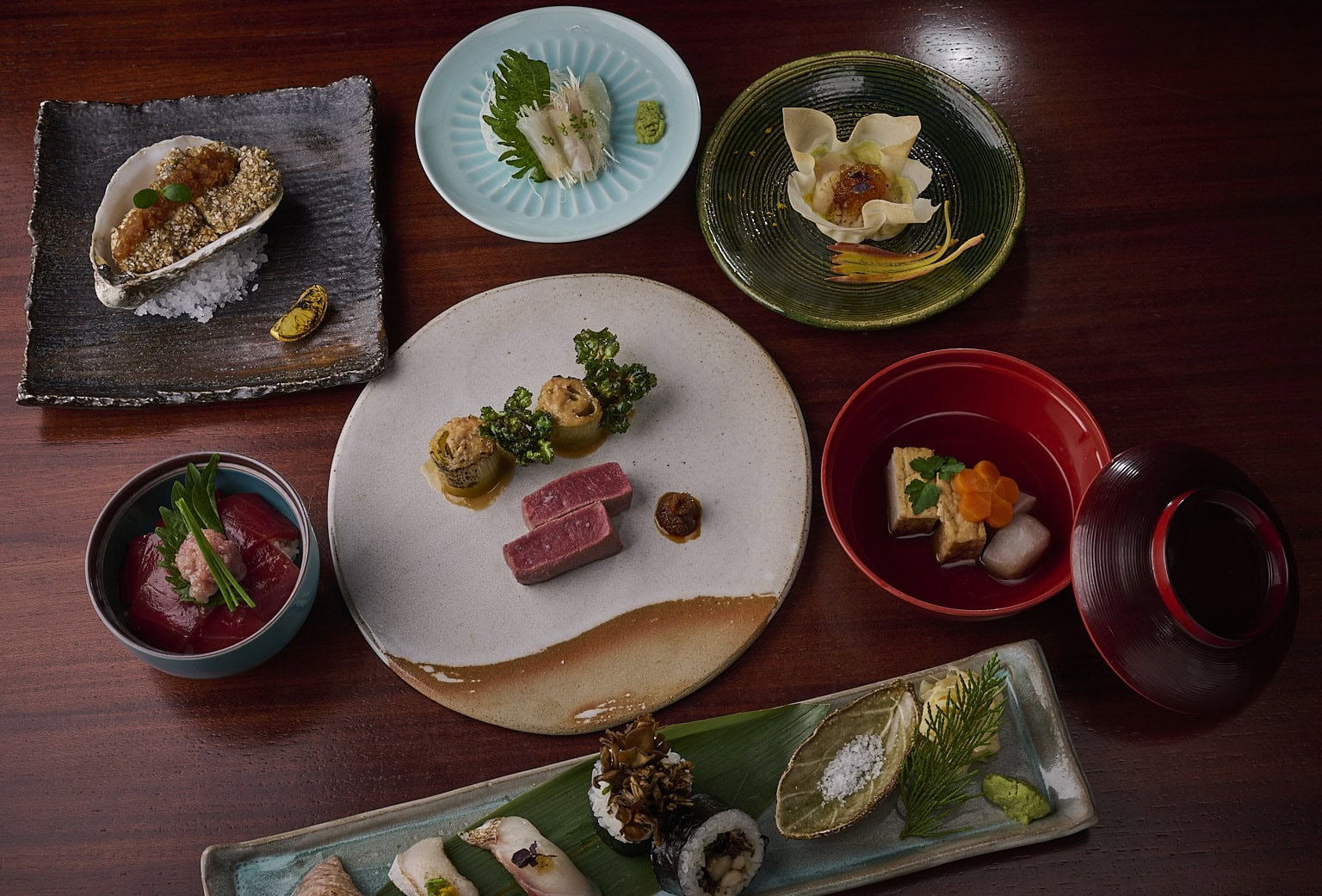
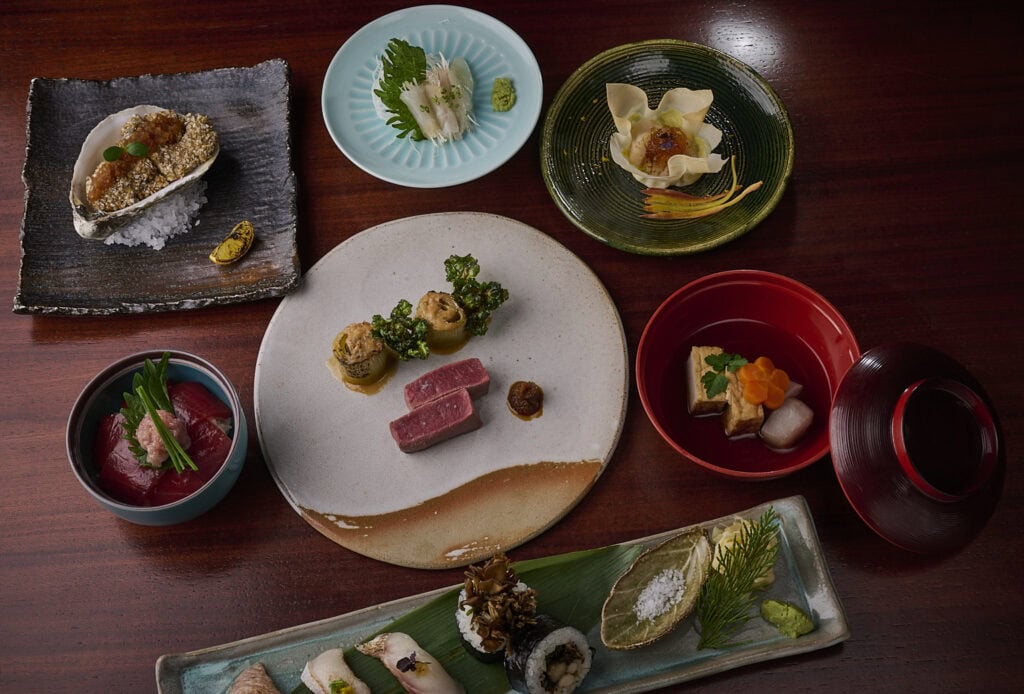
Hotate Scallops and Cauliflower
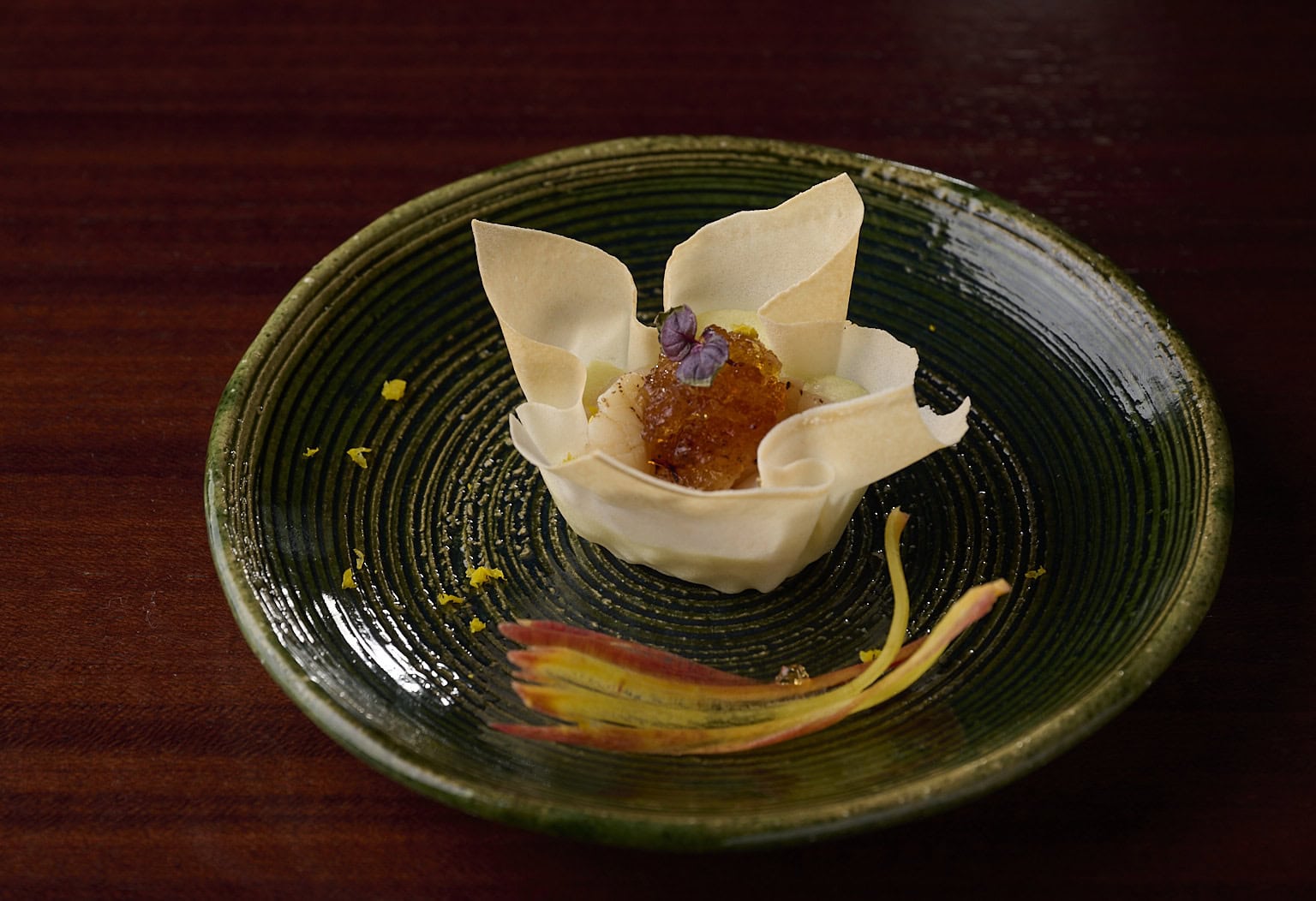
Scallops, cauliflower cream, tosazu, yuzu
Our Sake-Recommendation in the optional beverage accompaniment:
Akitabare-Suirakuten / Daginjō / polished to 40 % / 15-16 % Vol. / 4 cl
Sumashijiru すまし汁
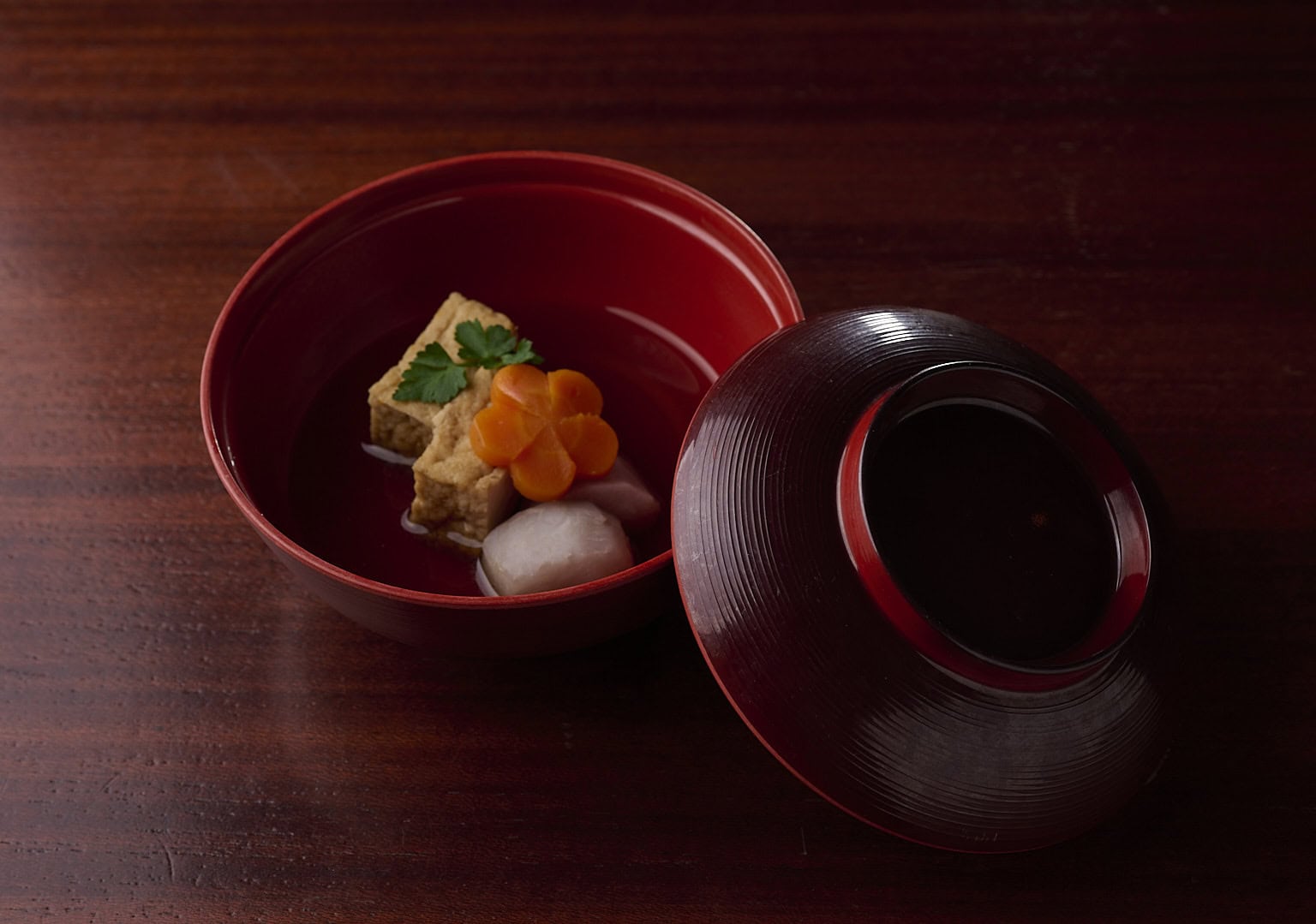
Katsuo konbu dashi with tofu, taro, and carrot.
A fortifying soup based on our Classic dashi made with Munich water.
Sake is not recommended as an accompaniment to soup.
* Hirame no Myoga Maki (flounder with ginger rolls)
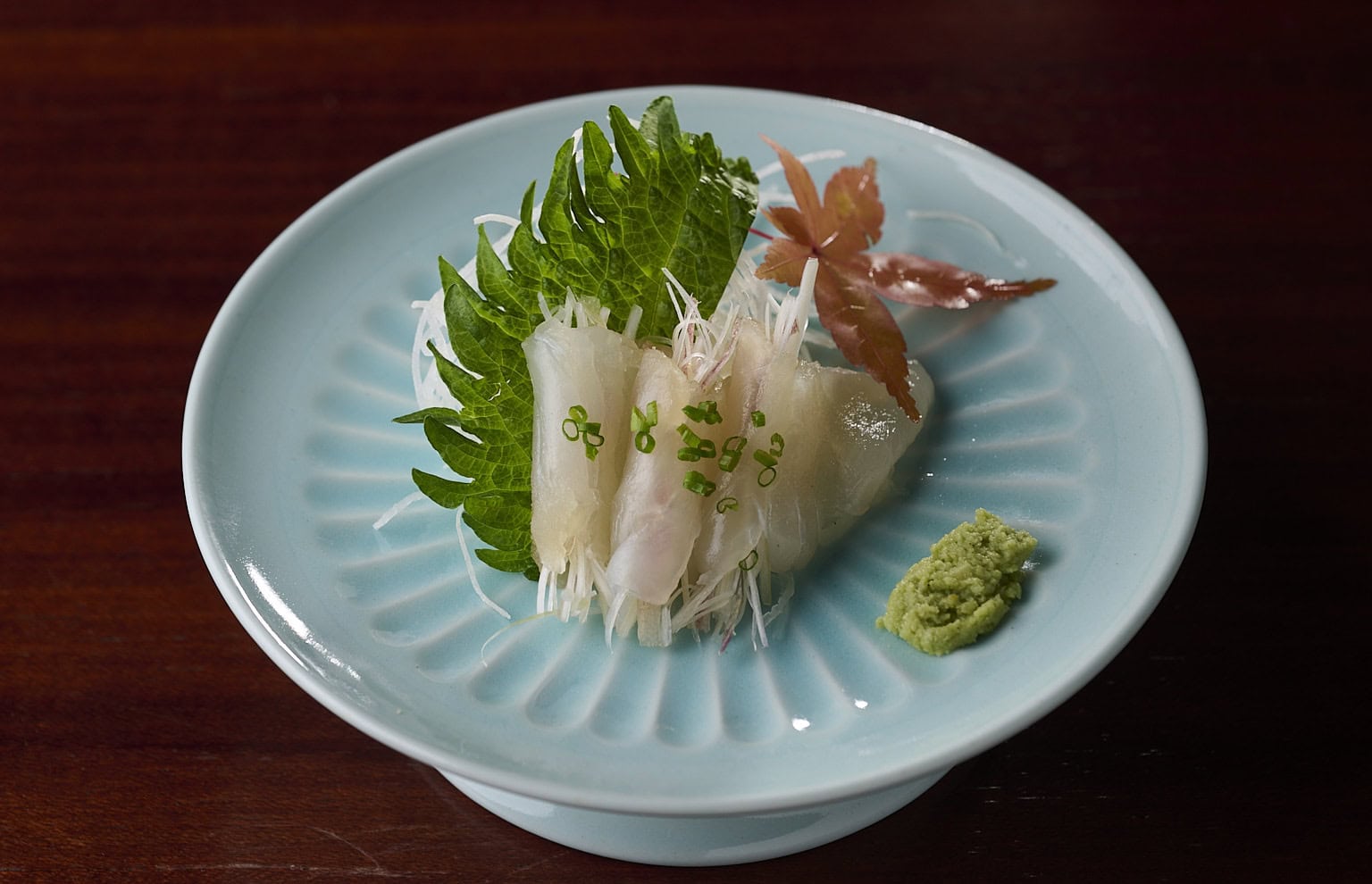
Halibut, myoga ginger, leek. Additional course in the 7-course option.
Hirame (in our case, made from excellent Norwegian halibut) is perfect for this time of year. Fat is stored in its tender flesh, and we delicately roll some myoga (Japanese radish) into the fish.
„Unique,“ „wonderful,“ and „so aromatic!“ we hear three retirees raving on the first evening, who apparently spent some time in Japan a few years ago. A very simple dish with good ingredients, but that's precisely what makes Japan connoisseurs happy.
Can also be ordered individually for €16.
The sake accompaniment is included in the drinks list:
Masumi-Kuro / Junmai Ginjō / polished to 55 % / 15 % Vol. / 4 cl
* Kaki Nanae-an Oyster Seven-Layer Paste
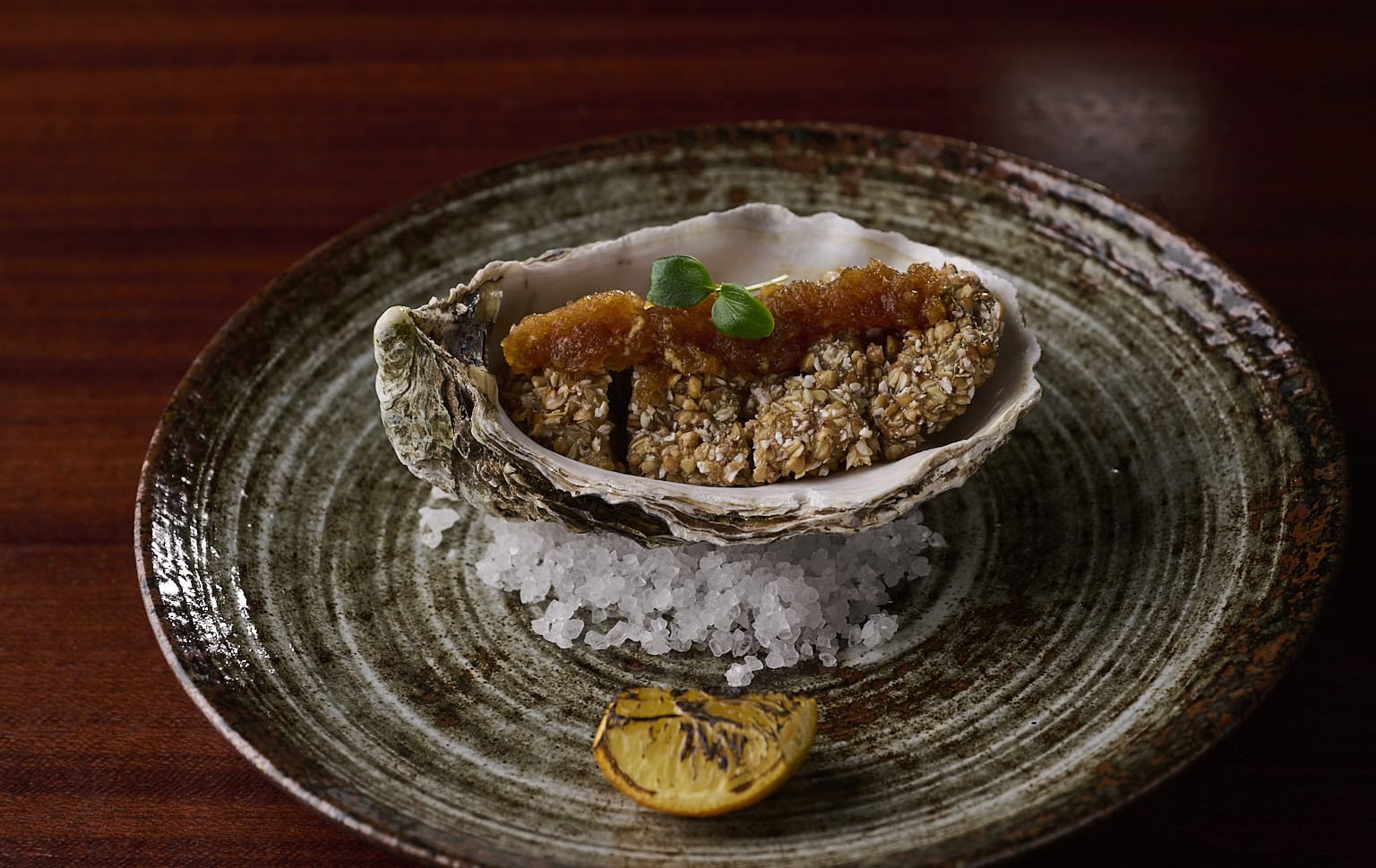
Oyster in buckwheat coating, sudachi, radish, apple.
Additional course in the 7-course option or individually for 16 euros.
Oysters, which are in season in winter, are not only eaten raw in Japan, but also prepared in a variety of ways.
One of the most popular dishes among the Japanese is „kaki frai,“ which is breaded and deep-fried.
We have refined this dish by adding buckwheat seeds to the dough.
Soba noodles, made from buckwheat seeds harvested in autumn, are enjoyed by the Japanese at this time of year as shin-soba (new buckwheat noodles). And on New Year's Eve, it is customary to eat soba noodles to wish for a long life.
Apples are used for the sauce. It is said that the Germans were the first to bring apple trees to Japan and cultivate them there. Apples are a typical winter fruit in both Japan and Germany, and this dish symbolizes the motto „Japan meets Germany“.
To accompany the sake, we serve a Shõchū:
Soba Shōchu / 25% ABV / 4 cl
Sushi
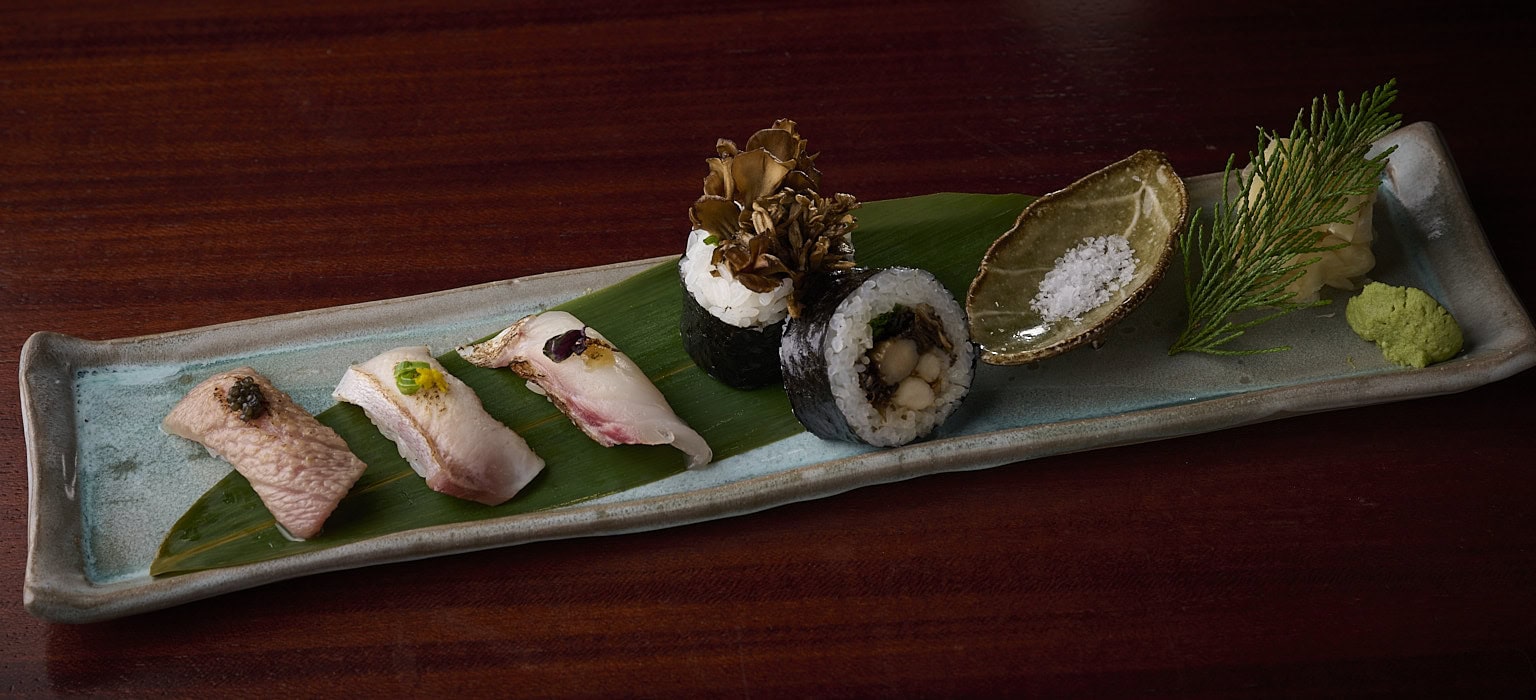
Available as an optional extra on request:
small tuna zuke don, Marinated bluefin tuna on rice + $18
Shika Niku Yama Wasabi 鹿肉の山わさび添え
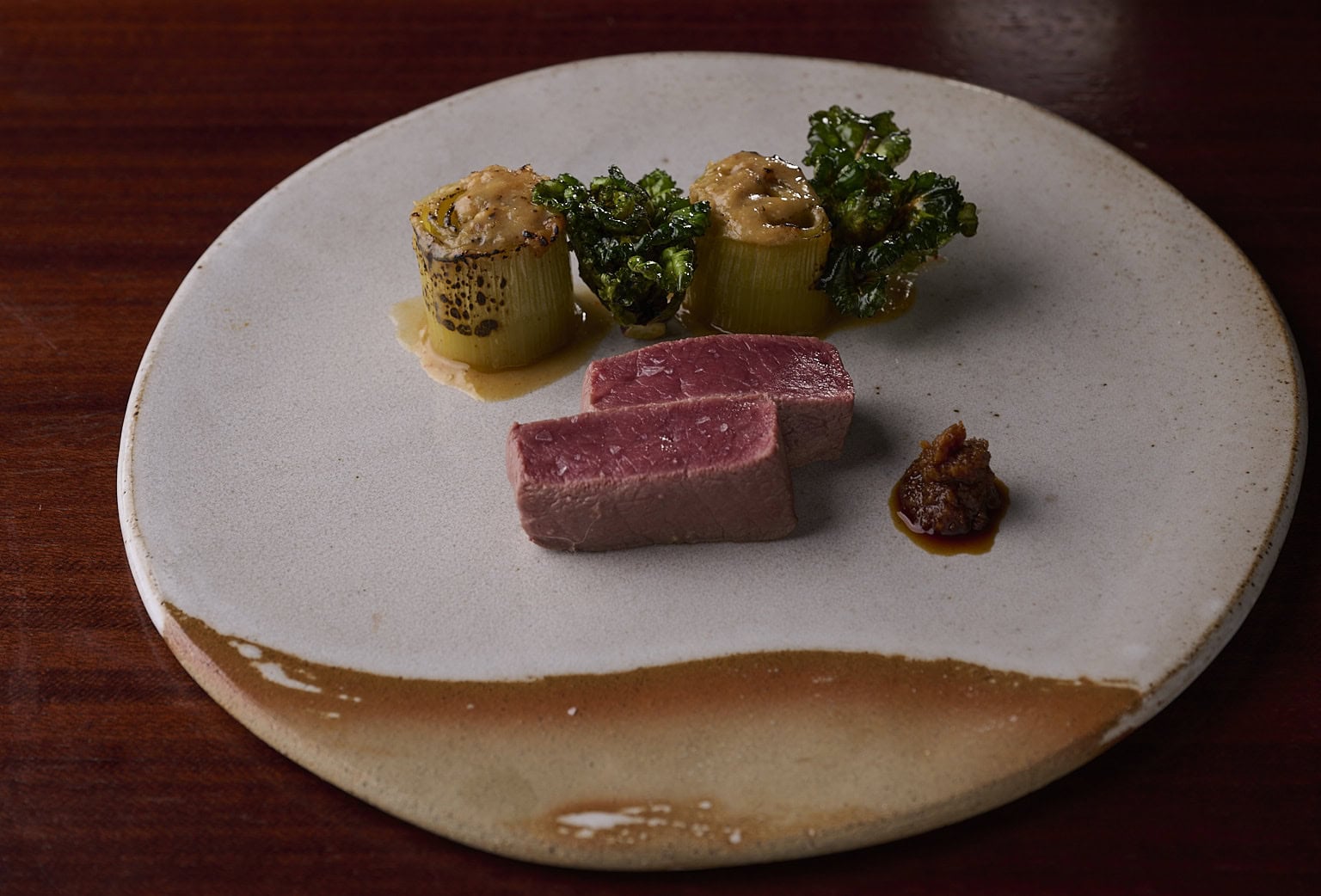
Venison loin from the mountain hunt in Oberammergau, leek, cabbage roses, miso
Another highlight is top-quality venison from Wilden Max in Germering, perfectly matured with a „mountain wasabi sauce,“ a Japanese sauce made with horseradish.
In the old It was Japan not customary, raising livestock for food. But back then, people definitely ate game that had been hunted.
Hokkaido, where the chef who developed this dish comes from, is particularly known for its snowy climate, and venison is a widely used ingredient there.
Tradition of hunting in Japan
Japan has a rich tradition of hunting, including hunting in mountainous regions. This tradition is closely linked to Japanese culture, history, and its unique relationship with nature.
Japanese mountain hunting, especially the Tradition of the Matagi hunters from northern Japan, is characterized by respect for nature and sustainable practices. They hunted deer and other wild animals in the mountains and integrated the entire prey into their way of life, often with spiritual rituals.
Straight deer meat (Shika-Niku) has a long tradition in Japan and is valued for its mild flavor and versatility in dishes such as shika-nabe (deer hot pot). Venison is known for its high nutritional value—low in fat and rich in protein and iron.
What makes mountain-hunted game special
The meat for our „Winter Solstice“ menu comes from Wild Max in Germering and from mountain hunting in Oberammergau and Berchtesgaden.
Game from mountain hunting is something very special and stands out clearly from other hunting grounds. The animals live in untouched, natural mountain regions and feed on a variety of wild herbs and plants, which gives the meat a unique, intense flavor. Constant movement in challenging terrain gives the meat a firmer texture, which connoisseurs particularly appreciate.
In addition, the less stressful environment in the mountains ensures exceptional meat quality, which, combined with sustainable hunting methods, offers a real culinary highlight.
Mountain hunting itself is far more demanding and complex than hunting in flat regions—it requires extensive experience, endurance, and respect for nature. This craftsmanship and the challenge involved make game from mountain hunting a rare and exclusive delicacy.
The green vegetable served as a side dish with game is called „petit vert.“ This vegetable originates from Japan and is a cross between Brussels sprouts and kale.
Kamoizumi / Junmai Daiginjō / polished to 50% / 16% ABV / 4 cl
Dessert
Chocolate, mikan, chestnut, kinako
In Japanese cuisine, desserts often lead a shadowy existence between simple seasonal fruit and specialties that are sometimes unfamiliar to Europeans. Especially now, with the cold weather, we are combining Japanese and European tastes once again with chocolate, which makes people happy, and some seasonal Japanese ingredients.
Recommended drinks to accompany this dish:
Nikka Coffey Malt Whisky / 45% ABV / 2 cl
or
Mikan liqueur / 5% ABV / 4 cl
5 courses per person $105 — Accompanying beverages $38
* 7 courses per person $125 — Accompanying beverages $48
Feedback on the winter menu 2024/2025
Creating new menus time and time again is a challenge and a great pleasure for us. Don't miss out on any of our menus or Events. We are grateful and delighted that we are able to work so deeply with Japanese cuisine.
The first guests to try the new winter menu were a table of three pleasant gentlemen in their prime. As it turned out, one of the couples at this table had visited Japan frequently in recent years. All three guests were thoroughly impressed by our fine Japanese cuisine, which seemed to remind them of their most memorable culinary experiences in Japan over the past twenty years.
This makes us so happy! We are deeply touched and grateful for the wonderful feedback we have received on the entire menu, from starters to desserts, and we are delighted that our efforts to create modern Japanese cuisine are being noticed and appreciated.
The process of creating a menu in three languages (German & Japanese, English & Japanese) that is consistent, reconciling Japanese and Western terminology, as well as designing the menu behind the scenes and constantly searching for Japanese tableware – a great deal of effort goes into everything, and when guests have a wonderful time and enjoy the food, we are truly grateful.
Book online now Your table – we look forward to your visit.