
Koshi no Kanbai
There is a wide variety of breweries and types of Japanese sake. Here we report on a brewery that produces extremely exclusive sake and particularly represents the Japanese ideal of fine, balanced sake: the legendary „Koshi no Kanbai“ brand from the Ishimoto brewery in Niigata. Koshi no Kanbai – The winter plum from Niigata Koshi no […]
Muku
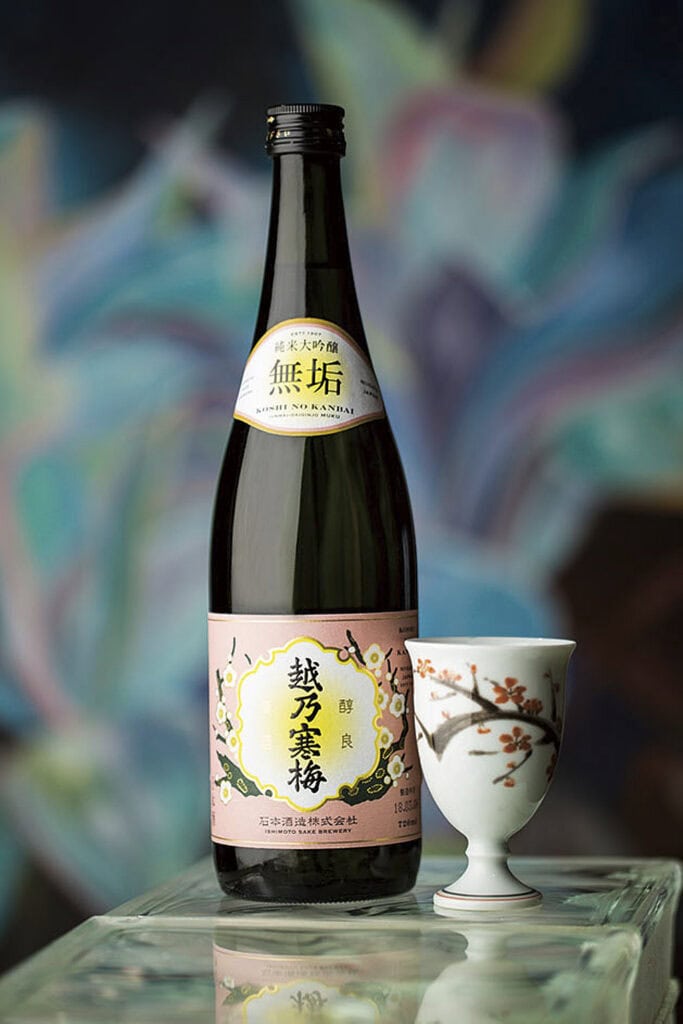
The Koshi no Kanbai brewery is known for its particularly successful sake in the typical Niigat style. Muku is an entry-level sake into the world of Koshi no Kanbai, simply because it almost always goes well with food and is not that expensive. Muku — A pure, elegant Junmai Daiginjo „Muku“ is a Junmai Daiginjō that lives up to its name [...].
Trip to Japan 草萌え Spring Awakening
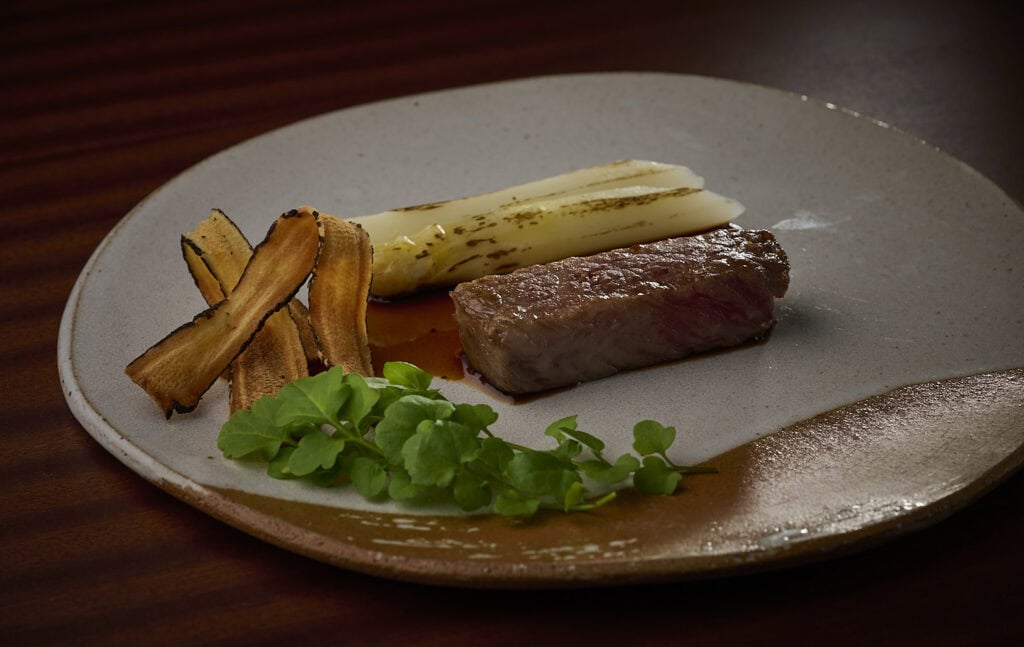
Following the great success of our Winter Solstice menu, it's time for a new beginning at the start of March: 草萌え Kusamoe Spring Awakening 2025 „Kusamoe“ means that spring is coming and the grass is beginning to sprout. It is a seasonal word that describes the spring scenery. It shows how nature awakens to new life. And as always, there is a […]
Chōmiryō – A journey through Japan's seasonings (調味料)
In Japanese cuisine, seasonings (chōmiryō) are among the most important elements for creating the typical flavor and characteristic balance between sweetness, saltiness, acidity, and umami. This does not just refer to salt or sugar, but to a whole range of ingredients and products that refine every dish. […]
3 toques Gault & Millau 2025
We are delighted that Gault&Millau has discovered our restaurant and awarded sansaro three black toques for 2025 right from the start. For our entire team, this is not only confirmation of our hard work and love of Japanese cuisine, but also an incentive to continuously improve our offerings and quality.
Valentine's Day 2025 – a butterfly in winter
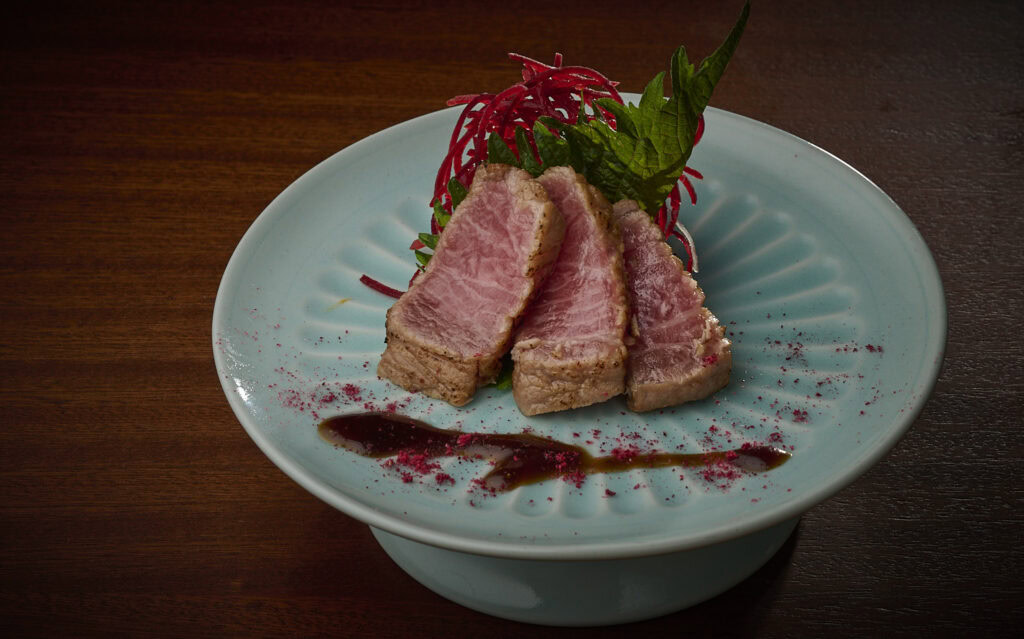
As always, we have prepared something very special for Valentine's Day 2025. A little treat: if you can't make it on Valentine's Day this time, you can also try the menu on February 15 and 16 at our restaurant (instead of our seasonal menu „Journey to Japan Winter Solstice")! Valentine's Day 2025 Menu 冬に咲く蝶 Hyōsetsu no chō On Valentine's Day [...]
Shōjin-Ryōri – vegetarian Japanese temple cuisine
Introduction to Shōjin-Ryōri (精進料理) Shōjin-Ryōri (精進料理) is a form of Japanese cuisine that is closely linked to Buddhism, particularly Zen (禅). Shōjin-ryōri is often referred to as vegetarian temple cuisine. Shōjin-ryōri is an important part of the culinary heritage of washoku: it combines respect for all living things with sophisticated cooking techniques and an aesthetic that […]
Fine dining – differences between haute cuisine and kaiseki
The art of presenting varied yet harmonious dishes in a multi-course menu is a demanding challenge. In Japan, kaiseki (会席) is held in particularly high regard; it is considered a culinary art form in which every detail—ingredients, preparation, tableware, and presentation—is coordinated. French haute cuisine, on the other hand, is considered the pinnacle of culinary art in Europe and […]
Trip to Japan 冬至 Winter solstice
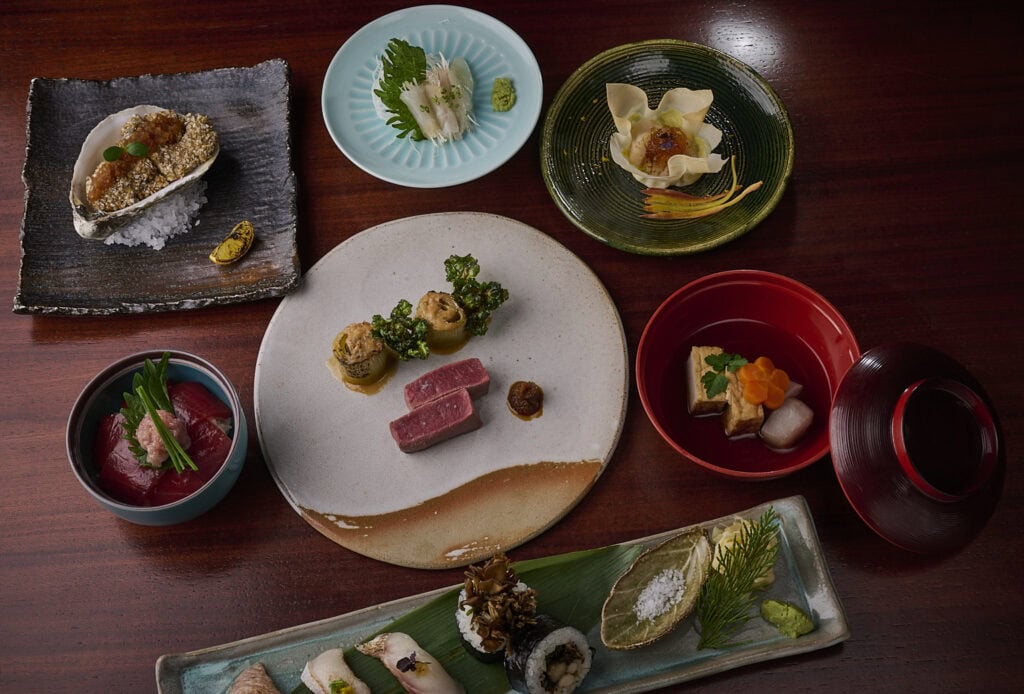
Since 2024, the best way to experience seasonal Japanese cuisine in Munich has been our ever-changing „Journey to Japan“ menu, where we take you on a culinary trip to Japan in 5 or 7 small courses. 冬至 TōjiWinter Solstice 2024 Around December 22 each year, the winter solstice takes place, the shortest day and […]
Honzen-Ryōri – the historical feasts of the samurai
Overview of Honzen-Ryōri (本膳料理) Honzen-Ryōri (本膳料理) had a major influence on the development of Cha-Kaiseki (茶懐石) and Kaiseki-Ryōri (会席料理). However, few people, whether Japanese or foreign, know exactly what the term Honzen-Ryōri means. Below, we provide a detailed insight into this traditional form of Japanese cuisine. Three forms of classic Japanese […]